



Quick Summary
When a driver hits a cyclist, the driver is often responsible when careless driving caused the crash—such as opening a door into a bike lane, turning across a cyclist’s path, failing to yield, or passing too closely. Your first priorities are getting medical attention, calling law enforcement when appropriate, documenting the scene if you can do so safely, and preserving your bicycle, helmet, clothing, and other evidence before anything is repaired or thrown away.
A collision can leave you shaken, in pain, and unsure whether anyone will take what happened seriously. At Eftekhari Law Office, we help injured cyclists throughout Evanston, Chicago, and Cook County understand their options and pursue accountability based on the specific facts of the crash.
How Drivers Commonly Cause Bicycle Crashes
People riding bicycles have the same right to use many Illinois roadways as other traffic. Yet drivers do not always look carefully for cyclists before opening a door, changing lanes, or turning. A driver’s failure to share the road safely can cause a serious crash in seconds.
Dooring
happens when someone in a parked vehicle opens a door into the path of an approaching cyclist. This is especially dangerous on busy Chicago streets and along corridors where parking sits next to bike lanes. A driver or passenger should check for approaching traffic, including cyclists, before opening a vehicle door.
Right-hook collisions
occur when a driver turns right across the path of a cyclist traveling straight. The driver may have passed the cyclist moments earlier, failed to check a mirror or blind spot, or assumed the cyclist would stop. These crashes often occur at intersections, driveways, and parking-lot entrances.
Left-turn crashes
may happen when a driver turning left fails to yield to an oncoming cyclist. A bicycle can be harder for an inattentive driver to judge, but that does not excuse a failure to look, yield, and complete the turn safely.
Unsafe passing
can force a cyclist off the road, create contact with the vehicle, or leave too little room to avoid debris and uneven pavement. Drivers must use reasonable care when overtaking someone on a bicycle. The available space, speed, traffic, road layout, and conditions all matter.
Fault Depends on the Evidence, Not Assumptions
It is understandable to assume that a person in a car will automatically be blamed for hitting a person on a bike. In reality, fault is fact-specific. The details may include who had the right of way, traffic signals, lane positioning, visibility, speed, road conditions, distracted driving, and whether either person violated an applicable traffic rule.
Illinois uses a modified comparative negligence rule in most injury claims. Generally, an injured cyclist may recover damages if they are 50% or less at fault. Any recovery is reduced by the cyclist’s percentage of responsibility. For example, if a cyclist is found 20% at fault, the damages awarded would generally be reduced by 20%. If the cyclist is found more than 50% at fault, recovery is generally barred.
That rule is not a reason to accept an insurer’s first account of what happened. Insurers may focus on a cyclist’s clothing, position in the roadway, or split-second actions while overlooking the driver’s choices. If you feel dismissed because you were riding a bike rather than driving a car, your frustration is valid. A careful review should consider the full event, not a stereotype about cyclists.
How Chicago and Evanston Road Rules Can Matter
Chicago and Evanston have developed bicycle lanes, marked routes, intersection treatments, and other infrastructure intended to make streets safer for people riding. The existence and design of a bike lane, shared lane marking, protected lane, traffic signal, or parking configuration can help explain where a cyclist was expected to travel and what a reasonably careful driver should have anticipated.
Illinois traffic laws and local Chicago or Evanston ordinances may also be relevant to issues such as yielding, turning, opening vehicle doors, lane use, and passing. However, no single sign, lane marking, or ordinance automatically decides a case. The precise language of the rule, the location, and the circumstances of the collision all need to be evaluated carefully.
As an Evanston personal injury law firm serving riders across Cook County, Eftekhari Law Office looks at the roadway as it actually existed on the day of the collision. That can include photographs, street-view records, lane layouts, construction conditions, signal placement, and the movements of every vehicle involved.
Document the Scene and Preserve What You Can
If you are physically able and it is safe to do so, take photographs and video before leaving the scene. Capture the vehicle, license plate, damage to the bicycle, your helmet, torn clothing, visible injuries, the intersection, lane markings, parked cars, debris, weather, lighting, and any potholes or road defects. A wide view establishes the setting; close-up images preserve the details.
Ask witnesses for their names and contact information. Independent witnesses can be especially important when the driver and cyclist give different accounts. Also look around for possible traffic cameras, nearby businesses, residential doorbell cameras, transit cameras, or building surveillance. Footage can be overwritten quickly, so identifying likely camera locations early matters.
Do not repair your bicycle, replace your helmet, wash damaged clothing, or dispose of broken equipment until the evidence has been documented and you have received legal guidance. Even a cracked helmet, bent wheel, damaged light, or torn glove may help show the force and direction of impact. Keep copies of the police report, medical records, bills, correspondence, and any messages from the driver or insurance company.
Our bicycle accident attorneys
conduct thorough investigations using witness accounts, police reports, surveillance footage, and other available evidence. Prompt action can make a meaningful difference in what information remains available for review.
Take Injuries Seriously, Even When Symptoms Appear Later
Bicycle crashes can cause injuries that range from painful to life-changing. Common injuries include broken wrists, collarbones, ribs, arms, legs, and hips; road rash that may scar or become infected; head injuries; and neck injuries involving muscles, discs, or nerves. A hard impact can also aggravate a prior condition or create symptoms that were not obvious in the first hours after a crash.
Adrenaline can mask pain. You may feel focused on getting home, protecting your bike, or minimizing what happened, only to develop headaches, dizziness, nausea, stiffness, numbness, concentration problems, or increasing pain later. Follow up with a medical professional, follow the recommended care plan, and report new or worsening symptoms promptly. Medical records can support both your health and a clear understanding of the injuries connected to the collision.
Head trauma deserves particular attention. Loss of consciousness is not required for a concussion or other brain injury. Seek urgent medical care for severe or worsening headache, repeated vomiting, confusion, weakness, trouble speaking, seizures, or other concerning symptoms.
Protect Your Claim Without Letting an Insurer Rush You
An insurance adjuster may contact you soon after the crash and ask for a recorded statement, medical authorization, or quick settlement. You can be polite without agreeing to provide broad information or make decisions before you understand the extent of your injuries. Early offers may not account for follow-up treatment, missed work, bicycle replacement, future care, or the longer impact of a serious injury.
Eftekhari Law Office can review the circumstances of a bicycle collision, explain the next steps, and communicate with insurers while you focus on recovery. Every case is different, and no result can be promised, but a timely and well-supported claim gives you a better opportunity to have the facts evaluated fairly.
If a driver hit you while you were cycling in Evanston, Chicago, or elsewhere in Cook County, you do not have to sort through the aftermath alone. Contact Eftekhari Law Office at 312-283-0905 or get a free case review to discuss your situation in a free consultation.
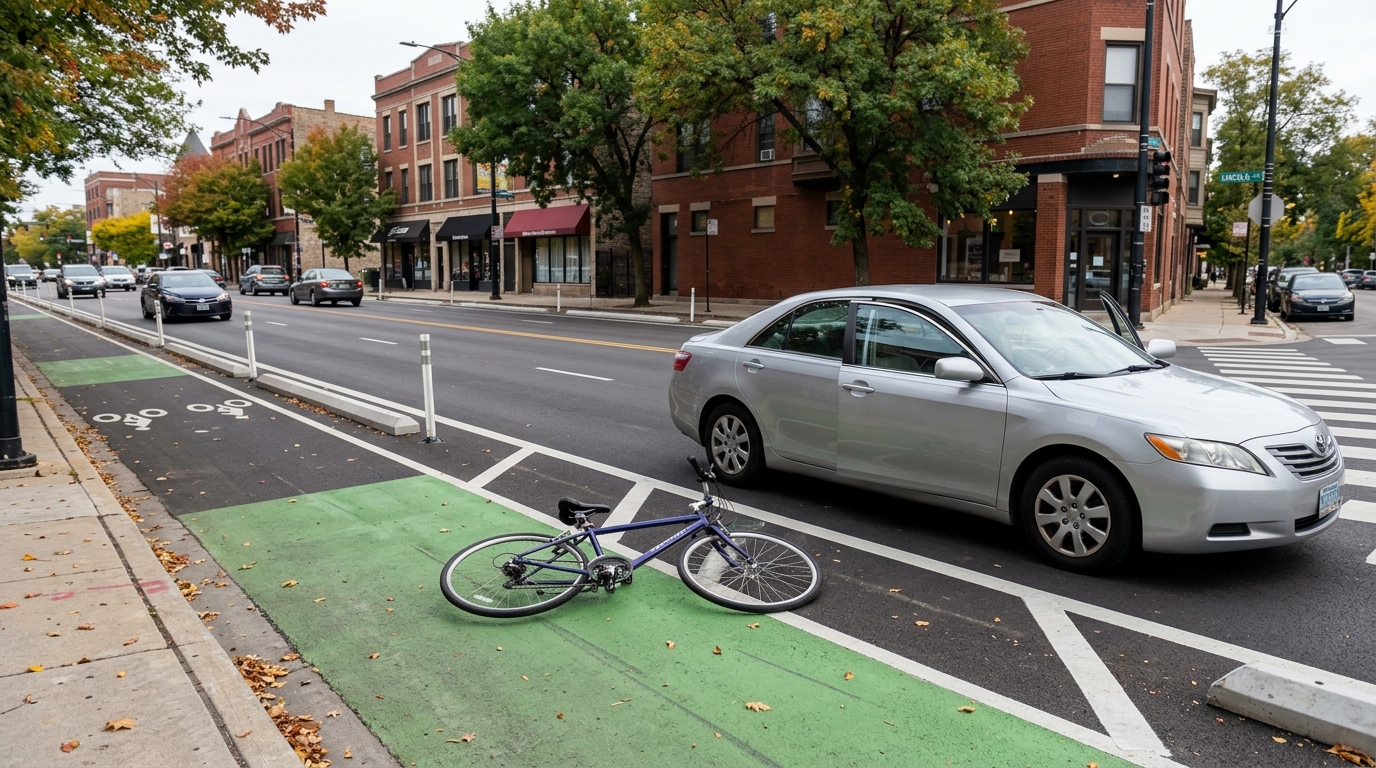
Bicycle Accidents in Chicago and Evanston: Who’s Liable When a Driver Hits a Cyclist
Motorcycle Accidents: What Injured Riders in Illinois Need to Know
What Families Need to Know About Preventable Birth Injuries in Illinois

Fireworks Safety Month Risks And Liability Explained
Should You Consider a Dash Cam for Safer Illinois Driving

Understanding Workplace Sexual Harassment and Your Rights in Illinois
The Silent Crisis in Healthcare: Understanding Medical Errors

Why Relying on AI Instead of an Attorney for Legal Matters Is Risky (and What You Should Do Instead)
Read more
Why It’s Never Okay for a Supervisor to Use Sex, Power, or Fear Against an Employee — And How the Law Protects You
Spring Break Safety Tips: Simple Ways to Protect Yourself on Vacation

Understanding Diagnostic Errors in Medical Malpractice Cases

Understanding What Workplace Injuries Are Covered by Workers’ Compensation in Illinois
When Surgical Errors Become Medical Malpractice Cases in Illinois
When a Winter Slip and Fall Becomes a Personal Injury Case

When to Take Legal Action After a Dog Bite

Pedestrian Safety Tips for Darker Winter Days
Why Truck Accident Cases Are More Complicated — And How We Help
Understanding Key Types of Workers' Compensation
Construction Injuries: Seeking Justice for the Negligently Hurt

Medical Errors!!

What to Do Right After a Car Accident

Rideshare Passengers: Steps to Take if You’re in a Crash
Read more