




Quick Summary
After a motorcycle crash in Illinois, put your health first, call 911 if needed, get medical attention, and preserve what you can from the scene. It is also important to remember that fault is often unfairly assumed against riders, but assumptions about motorcycles do not take the place of evidence.
A serious crash can leave you in pain, without transportation, and facing insurance calls before you have had time to process what happened. Eftekhari Law Office helps injured motorcyclists in Evanston, Chicago, and throughout Cook County understand their options and take practical next steps.
Why Motorcycle Crash Injuries Can Be So Severe
Motorcycles offer freedom and control, but they do not provide the protective structure of a passenger vehicle. A car has seat belts, airbags, a steel frame, and multiple impact zones. A rider has protective gear, training, and skill, but little physical barrier between their body and another vehicle, the pavement, or a fixed object.
That difference can make even a relatively low-speed impact life-changing. Riders may suffer fractures, road rash, torn ligaments, internal injuries, traumatic brain injuries, spinal injuries, or other catastrophic harm. The consequences can extend far beyond the emergency room. Follow-up care, surgery, rehabilitation, time away from work, and the disruption of ordinary routines can all become part of the picture.
Do not dismiss pain simply because you were able to stand up after the crash or because your motorcycle damage appears limited. Adrenaline can mask symptoms, and some injuries become clearer over the following days. Prompt medical evaluation protects your health and creates records that may later help show how the collision affected you.
Rider Bias Does Not Decide Fault
Many riders know the frustration of hearing an assumption before anyone has examined the facts: “The motorcycle must have been speeding,” or “The rider came out of nowhere.” Insurance adjusters, witnesses, and even potential jurors may carry stereotypes about motorcyclists. Those assumptions can be discouraging, particularly when you are already trying to recover.
But stereotypes are not evidence. The actual questions are what each person did, what traffic conditions existed, whether a driver saw or should have seen the motorcycle, and what the physical and digital evidence shows. Photographs, vehicle damage, video footage, witness accounts, roadway markings, and medical documentation can all matter more than a general belief about riders.
Illinois follows a modified comparative negligence rule. In plain language, more than one person can share responsibility for a crash. An injured rider may still seek recovery as long as the rider is not found to be more than 50% at fault. If the rider has some fault, any damages are reduced by that percentage. For example, a person found 20% responsible may have damages reduced by 20%. Recovery is barred only if the rider is found more than 50% at fault.
Every case depends on its facts. A careful review by an Illinois motorcycle injury lawyer can help identify evidence that addresses unfair blame directly rather than allowing an insurer’s first impression to control the conversation.
Common Causes of Motorcycle Crashes in Evanston and Chicago
Motorcycle crashes often happen because another road user fails to notice, properly judge, or safely share the road with a rider. In Evanston, Chicago, and across Cook County, several patterns appear repeatedly.
- Left-turn collisions: A driver turns left across a rider’s path, often claiming they did not see the motorcycle or misjudged its distance or speed.
- Blind-spot and lane-change crashes: A driver changes lanes without checking carefully, crowding a motorcycle or striking it from the side.
- Tailgating: A vehicle following too closely may not have enough space to stop when traffic slows or a rider must brake.
- Potholes and uneven pavement: Broken pavement, abrupt height differences, loose debris, and poorly maintained roadway surfaces can be especially dangerous for motorcycles.
- Failure to yield: Drivers entering traffic, pulling from driveways, or proceeding through intersections may fail to give a rider the right of way.
A roadway defect case can involve different issues than a crash with another driver, including questions about who controlled or maintained the location. The right next step depends on the circumstances, which is why prompt investigation matters.
Evidence to Preserve in the First Days
When you are hurt, gathering evidence may be the last thing on your mind. Your medical needs come first. Still, if you are able—or if a family member or trusted friend can help—preserving information early can make a meaningful difference later.
Start with photographs and video. Capture the scene from multiple angles, including the positions of vehicles, damage, debris, skid marks, traffic signals, lane markings, weather conditions, and any potholes or uneven pavement. Take detailed photos of your motorcycle before repairs or disposal. If possible, photograph the other vehicle, its license plate, and any visible damage.
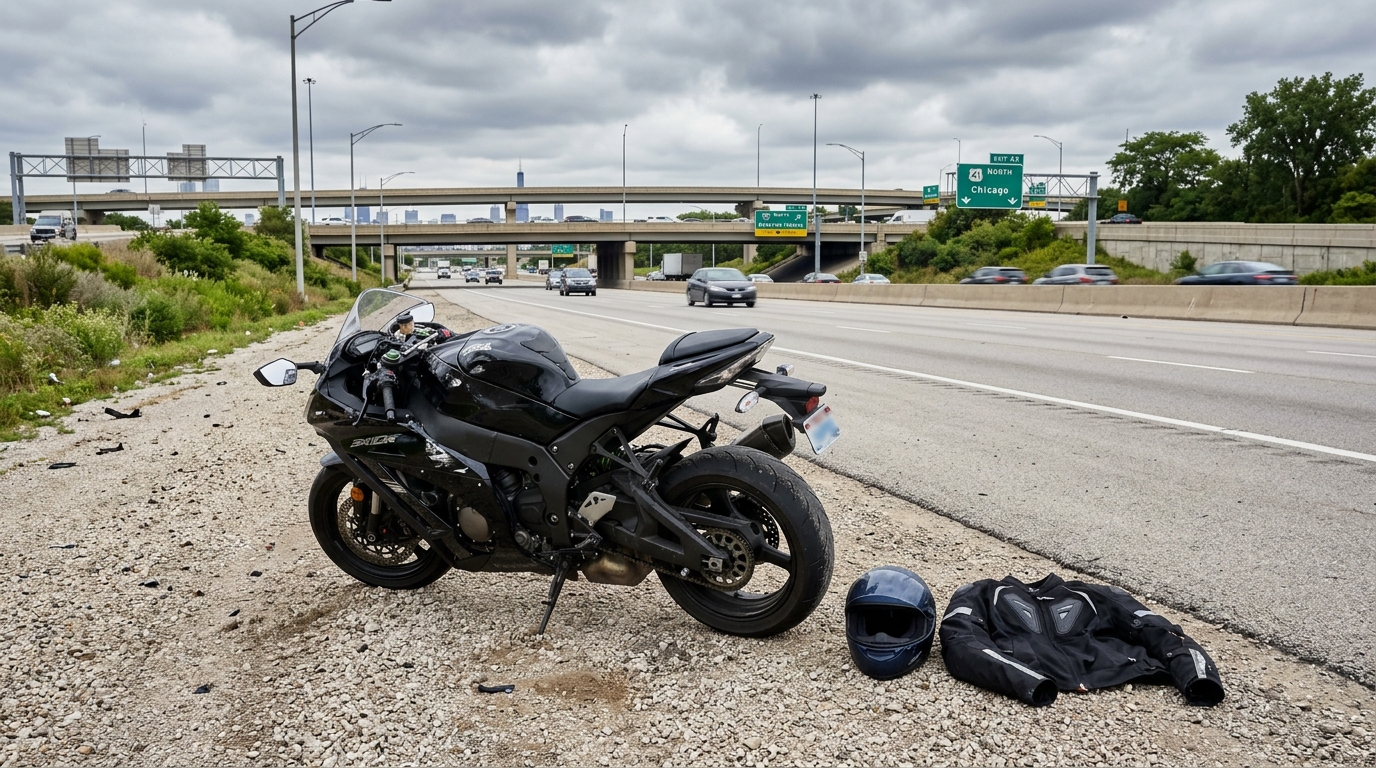
Keep your helmet, jacket, gloves, boots, and other damaged gear in a safe place. Do not throw them away or repair them immediately. Damage to protective equipment can help document the force and nature of the collision. Save receipts for replacements and keep a simple record of expenses tied to the crash.
Get names and contact information for witnesses, even if police spoke with them. Independent witnesses can be important when a driver disputes what happened. Also save the police report information, communications from insurers, towing records, and any available dashcam or nearby business surveillance footage.
Medical records matter as well. Follow the treatment plan recommended by your providers, attend appointments when you can, and keep copies of discharge papers, imaging results, prescriptions, therapy notes, and work restrictions. A short personal journal can also help you accurately remember pain levels, mobility limitations, missed work, and changes to daily life.
Be Careful With the Other Driver’s Insurer
It is common for the other driver’s insurance company to call quickly and ask for a recorded statement. The adjuster may sound courteous and may say the statement is needed to move the claim forward. You can be polite without agreeing to provide a recorded statement before you understand your situation or receive legal advice.
Early questions can seem simple, but your injuries, the cause of the crash, or the full impact on your life may not yet be clear. A casual answer can be taken out of context later. You should report the crash to your own insurer as required by your policy, but be thoughtful about discussing fault or giving detailed recorded statements to the other driver’s insurer.
Before signing medical authorizations, accepting a settlement, or making a recorded statement, consider speaking with our motorcycle accident attorneys. An early settlement may not account for care or losses that have not yet become known.
Support From a Local Personal Injury Team
At Eftekhari Law Office, we understand that a motorcycle collision can feel personal when others immediately question your choices rather than examine the facts. Our role is to listen, investigate, explain the process in clear terms, and pursue the evidence needed to present your claim fairly. We serve injured riders in Evanston, Chicago, and Cook County with a client-focused approach.
Our personal injury representation is handled on a contingency-fee basis, which means there is no attorney fee unless you win compensation. We can discuss how fees and case costs work in your specific situation before you decide how to proceed.
If you were injured in a motorcycle crash, you do not need to sort through the insurance process alone. Contact Eftekhari Law Office to schedule a free consultation and discuss your situation with our team.
Motorcycle Accidents: What Injured Riders in Illinois Need to Know
What Families Need to Know About Preventable Birth Injuries in Illinois

Fireworks Safety Month Risks And Liability Explained
Should You Consider a Dash Cam for Safer Illinois Driving

Understanding Workplace Sexual Harassment and Your Rights in Illinois
The Silent Crisis in Healthcare: Understanding Medical Errors
Why Relying on AI Instead of an Attorney for Legal Matters Is Risky (and What You Should Do Instead)
Read more
Why It’s Never Okay for a Supervisor to Use Sex, Power, or Fear Against an Employee — And How the Law Protects You

Spring Break Safety Tips: Simple Ways to Protect Yourself on Vacation

Understanding Diagnostic Errors in Medical Malpractice Cases

Understanding What Workplace Injuries Are Covered by Workers’ Compensation in Illinois
When Surgical Errors Become Medical Malpractice Cases in Illinois
When a Winter Slip and Fall Becomes a Personal Injury Case

When to Take Legal Action After a Dog Bite

Pedestrian Safety Tips for Darker Winter Days
Why Truck Accident Cases Are More Complicated — And How We Help
Understanding Key Types of Workers' Compensation
Construction Injuries: Seeking Justice for the Negligently Hurt

Medical Errors!!

What to Do Right After a Car Accident

Rideshare Passengers: Steps to Take if You’re in a Crash
Read more